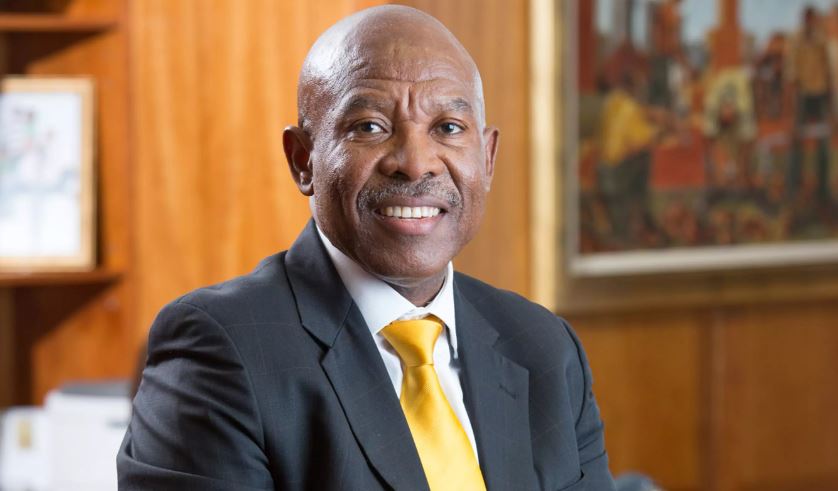
In this exploration, we delve into the bewildering world of South African headlines, where the financial landscape resembles a perplexing puzzle. Lesetja Kganyago takes the stage as the protagonist, navigating through the economic intricacies of South Africa, while our beloved nation plays a role in a never-ending enigma.
Kganyago’s Warning: The Master of Monetary Mayhem
So, our hero, Lesetja Kganyago, is here to give us the scoop on South Africa’s economic future. But let’s be real, it’s not looking too bright. The poor guy’s trying to anchor inflation at a specific rate, but he’s got more obstacles than Wile E. Coyote chasing the Road Runner. We’ve got currency weakness, more debt than you can shake a stick at, lower capital flows, and “less co-operation” from the fiscal authorities. It’s like trying to juggle flaming torches while riding a unicycle on a tightrope – not a pretty sight!
Oh, and guess what? Just before Kganyago dropped this bomb, finance minister Enoch Godongwana got a good roasting. He’s facing calls from academics, economists, and pretty much everyone in SA to halt budget cuts because the country’s finances are like a leaky boat. But no, the minister insists on budget cuts, like trying to dry off a soaking wet sponge with a hairdryer – good luck with that!
The South African Reserve Bank is kinda sorta optimistic about the country’s growth, forecasting a whopping 0.7% rise. Why? Well, they think it’s because of “stronger-than-expected investment and continued spending.” It’s like saying your car’s running great while it’s slowly sinking in quicksand.
Oh, and let’s not forget about Chris Loewald, the Bank’s head of economic research. He’s talking about “sustainable fiscal positions,” which sound as elusive as a unicorn. Apparently, they can help reduce those pesky high-interest burdens. But who knew, right? Lower risk premiums can even support capital flows into “savings-deficit economies.” It’s like saying, “Just plant a money tree in your backyard, and you’ll be fine!”
And in case you missed it, the Reserve Bank raised interest rates by a whopping 475 basis points since 2021. You might think they’re making an intricate origami sculpture with all those hikes, but they’re actually just trying to keep the economy from blowing up like a helium balloon.
In short, South Africa’s financial situation is like trying to fix a sinking ship with duct tape and a prayer.
Education Chaos: Comedy in the Classroom
Now, let’s switch gears and head to South Africa’s public schools. If you thought your school days were wild, wait till you hear about this. The office of the auditor-general has taken a peek inside state schools and found a whole circus of problems.
First up, they’ve got thousands of underqualified grade R teachers. It’s like casting Mr. Bean to teach nuclear physics. Then, there’s the money siphoning from food budgets to fund matric farewell events. Imagine using your grocery money to throw a fancy party for your pet goldfish. The schools are rocking overloaded buses – we’re talking sardines in a can, except the can is on wheels.
And don’t get me started on the dilapidated classrooms. These are like scenes from a horror movie, but with textbooks instead of ghosts. Now, our heroes have taken a deep dive into early childhood development, school nutrition programs, and pupil transport – it’s like walking into a funhouse full of wonky mirrors and trapdoors.
To top it off, money earmarked for school nutrition is being used for everything except feeding hungry kids. It’s like ordering pizza and using the money to buy pet rocks instead.
In essence, South Africa’s public schools are a madhouse, and these findings are just the tip of the comedy iceberg.
South Africa’s economic and educational conundrums leave us wondering if this real-life comedy will find its own twist ending or continue to baffle even the most astute observers.
Leave a Reply